
Swaddle Transitions 101

You’ve mastered the perfect burrito wrap. Baby is sleeping. Everyone is happy. And then — your little one starts looking like they’re training for a baby Olympic event, straining and twisting every time you lay them down. Sound familiar?
If your baby is showing signs of rolling — even at 8, 10, or 12 weeks old — the swaddle needs to go. I know, I know. It feels like pulling the rug out from under the one thing that’s working. But as a nurse practitioner, I need to be straight with you: this is a safety issue, and I’m going to walk you through exactly how to handle it so everyone still gets some sleep.
Let’s talk about why this matters, how to know it’s time, and the easiest ways to make the transition — including some product options that actually help.
To read the research behind swaddling, check this link https://pubmed.ncbi.nlm.nih.gov/28394766/
Why the Swaddle Becomes a Safety Risk When Baby Rolls
The swaddle is one of the best tools we have for newborn sleep in those early weeks. It mimics the snug feeling of the womb and dampens the Moro (startle) reflex that wakes babies up. But here’s what changes the equation:
| ⚠️ The Safety Issue |
| When a baby rolls while swaddled, their arms are pinned and they cannot push up with their hands. |
| If they end up face-down and can’t lift their head, that becomes a suffocation risk. |
| The American Academy of Pediatrics (AAP) is clear: stop swaddling as soon as your baby shows |
| ANY signs of rolling — not after the first roll, but at the first attempt. |
The reason the guideline kicks in before the first full roll is important: you cannot predict when it will happen. The first roll can occur in the crib, in the dark, overnight — and you may not be awake to intervene. It’s always better to be one step ahead.
How to Know It’s Time: 5 Signs Your Baby Is Ready to Roll
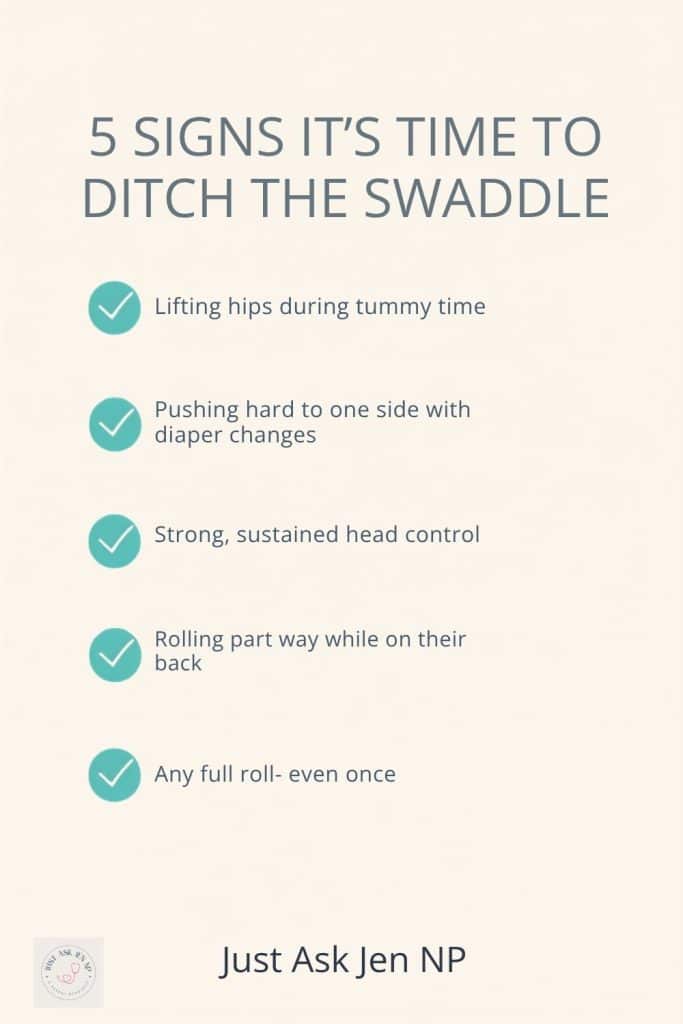
Here’s the checklist I give parents in my practice. If you’re seeing two or more of these, that’s when to stop swaddling:
- Consistently lifting and rotating one or both hips during tummy time
- Pushing hard to one side during diaper changes (that wiggly escape-artist energy)
- Rolling partway to their side when lying flat on their back
- Strong, sustained head control — holding their head up for several seconds during tummy time
- Any full roll — even once, even accidentally
Age is less important than these milestones. Some babies hit this stage at 8 weeks; others not until 4 months. Follow your baby, not the calendar.
The Swaddle Transition Plan: Two Approaches
There’s no one-size-fits-all here, so I’ll give you two methods and help you pick the right one for your family.
Option 1: Cold Turkey (Yes, Really)
Tonight, no swaddle. Baby goes straight into a sleep sack with arms free. For some babies — especially younger ones who haven’t become deeply swaddle-dependent — this works surprisingly well within a few nights.
Expect 3–5 rough nights. That’s not a failure; that’s adjustment. It is not permanent.
| ✅ Best for: |
| Babies under 10 weeks who are early rollers |
| Any baby where rolling is already happening — you can’t wait |
| Families who want to rip the bandage off fast |
Option 2: One Arm Out First (Most Popular)
Leave one arm free for 3–5 nights, then go to both arms free. This gives baby time to adjust to the sensation without losing the containment they love. It also gives them access to their hand for self-soothing — which many babies find naturally during this phase.
Pro tip: Start with the arm they escape most. If one arm is always busting out of the swaddle, that baby is telling you something. Work with it.
| ✅ Best for: |
| Babies 10+ weeks showing early signs of rolling but not yet fully rolling |
| Families who want a gentler, more gradual approach |
| Babies who are very swaddle-dependent and protest loudly without it |
Transition Products That Actually Help
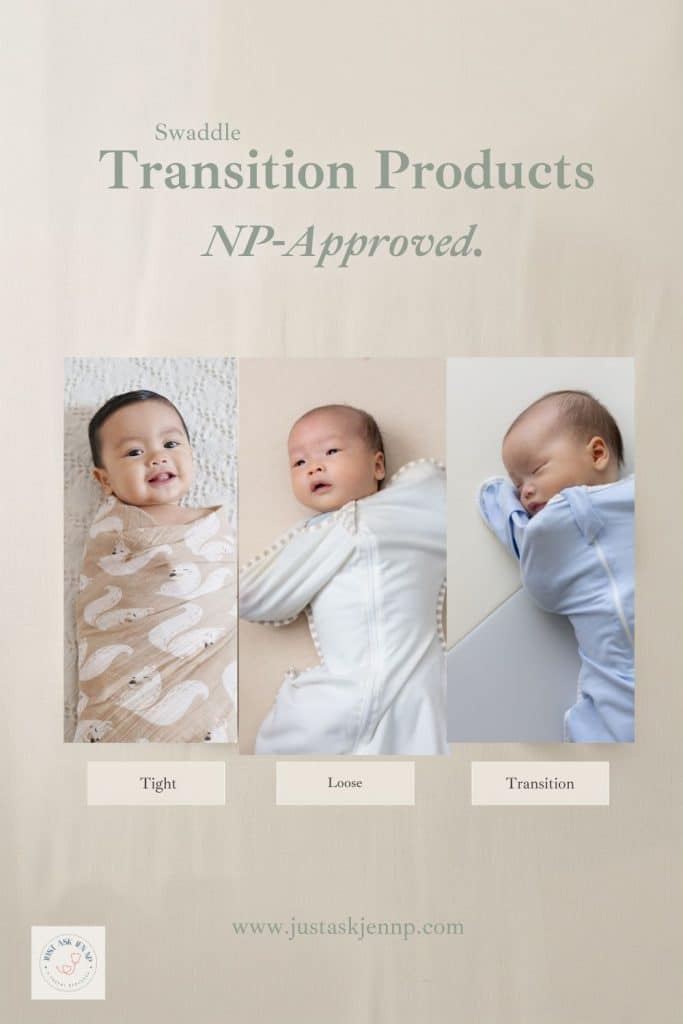
There’s a whole category of products designed for exactly this moment, and some of them are genuinely useful. Here’s my honest breakdown:


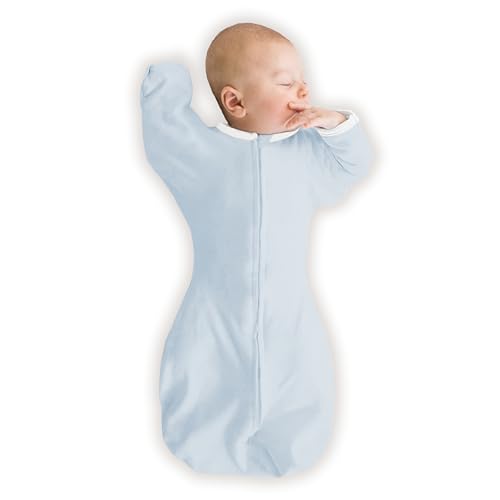
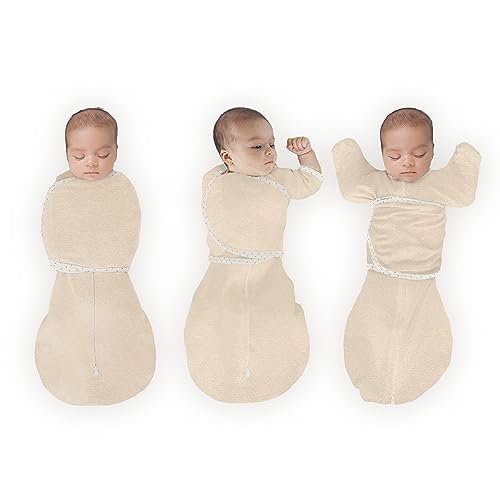

Love to Dream Swaddle UP Transition Bag
Snug fit to provide comfort and security. Allows for arms to be up near face for baby comfort.
Designed with arms-up zip-off wings so you can remove one or both arms at a time. If your baby has always preferred arms-up sleeping, this is an excellent starting point.
Zipadee-Zip
More movement allowed, but thin fabric and can bunch.
A star-shaped sleep sack that gives just enough resistance and containment to mimic the swaddle feeling without restricting movement. Works really well for babies who protest the total loss of containment.
Halo Sleepsack Swaddle
Standard Sleep sack with swaddle option.
Simple sleep sack that you can wrap with the swaddle bands or not. 2-way zipper for easy diaper changes. Arms are more contained in a low position in this swaddle.
SNOO Happiest Baby Sleep Sack
Breathable, velcro to secure the swaddle. Arms down*
Built for the famously popular SNOO bassinet. This swaddle uses velcro to keep baby contained and tight within the swaddle. Arms are in the lower position in this swaddle design.
Omni Swaddle Sack
Best for newborn who want hands near their face for natural positioning.
Compares to the Halo brand, but keeps arms and hands near baby’s face to allow for natural positioning and better comfort. Form fitting design through hips and legs for better control of limbs when sleeping.
Transitional Swaddle Sack
Best option for a new roller that still startles awake. Gradual transition.
Great option for early rollers who still startle. Gentle approach allowing multiple options as baby progresses to independent movement.
| ⚠️ Jen’s NP Note |
| Always check the manufacturer’s weight and developmental guidelines for any sleep product. |
| None of the transition products above are safe once your baby can roll well while wearing them. |
| When in doubt, ask your pediatric provider — that’s what we’re here for. |
What to Expect Night by Night
I want to be honest with you, because I think knowing what’s coming makes it easier to get through:
- More wake-ups. Baby will startle and may not know how to resettle without containment. This is the peak hard. Nights 1–2:
- Usually a bit better. Baby begins finding their hands and developing new settling strategies. Nights 3–4:
- Most babies have meaningfully adjusted. Many are close to their previous baseline. A few take a little longer — totally normal. Nights 5–7:
Things That Help During the Transition
- Lean harder on white noise — louder and consistent throughout the night
- Keep the room dark for both naps and nighttime
- Give extra settling time before going in — babies learn to resettle in new ways once their arms are free
- Use a pacifier if your baby takes one — it becomes powerful for self-soothing
- Temporarily add more contact naps or contact sleep during the day to offset lost nighttime sleep
| 💙 A Note on Naps |
| Yes, drop the swaddle for naps too. The rolling risk doesn’t care if it’s 2pm or 2am. |
| Consistent swaddle-free sleep — day AND night — also makes the adjustment happen faster. |
Your Questions Answered
My baby is only 8 weeks old. Isn’t this too early?
The timing doesn’t matter — the rolling does. Some babies roll early, and an 8-week-old who’s showing strong rolling signs needs the same safe sleep environment as a 4-month-old. It’s harder at a younger age, but it’s manageable, and it’s the right call.
We just hit a good sleep stretch. Will this ruin everything?
It may temporarily disrupt things — I won’t sugarcoat it. But here’s the reframe: good sleep at this age is mostly developmental. The swaddle wasn’t the reason for the good sleep — your baby was. Those abilities will come back. I promise.
What if they roll and I don’t hear it on the monitor?
Always place baby on their back to start. Continue using a monitor. Once your baby can roll both ways (back to front AND front to back), the risk decreases significantly because they can reposition themselves. The most vulnerable window is that early phase where they can roll one way but haven’t figured out how to get back.
My baby rolls to their stomach and then screams. Help.
This is the frustrating middle phase. During the day, work on tummy time strength to build the reverse roll. At night: if your baby has rolled themselves to their stomach and has good head control, you don’t need to constantly flip them back. Once they can get there themselves, it becomes a safe sleep position. Weak head control = go in and reposition.
The Bottom Line from Jen
Losing the swaddle can feel like losing the one thing that was working. But your baby outgrowing something is always a good sign, even when it’s inconvenient.
You’ve got this. The transition is temporary. The safer sleep environment you’re creating? That’s permanent. And if you’re lying awake at 3 a.m. wondering if you’re making the right call — you are. You’re reading this because you care, and that’s the whole game.
For a complete guide to everything you need for safe sleep, check this post out!
To learn the research behind sleep training go to this page.
