
Essential Guide for Easily Transitioning from Crib to Bed + 2 Downloads

That moment when you peek into the nursery and find your little one standing triumphantly on the crib rail—or worse, already on the floor—can send any parent’s heart racing. If you’re reading this, you’re probably wondering whether it’s time to say goodbye to the crib and hello to a big kid bed.
Take a deep breath. You’re asking the right questions, and I’m here to walk you through this transitioning from crib to bed with evidence-based guidance and plenty of encouragement.

The Research-Backed Timeline
According to the American Academy of Pediatrics, most children make the transition from crib to bed between 18 months and 3.5 years old, with the sweet spot typically landing around age 2 to 3.
But here’s what matters most: there’s no one-size-fits-all answer. Your child’s individual development, safety needs, and family circumstances should guide this decision far more than any arbitrary age milestone.
A 2019 study published in Sleep Medicine found that premature transitions (before 18 months) were associated with increased bedtime resistance and night wakings. This doesn’t mean you’re doing something wrong if you need to transition earlier—it simply means we should be thoughtful and intentional about the timing when possible.
Check out my YouTube video for readiness here.
Clear Signs Your Child Is Ready to Move from Crib to Bed
Safety Red Flags (Time to Move Now)
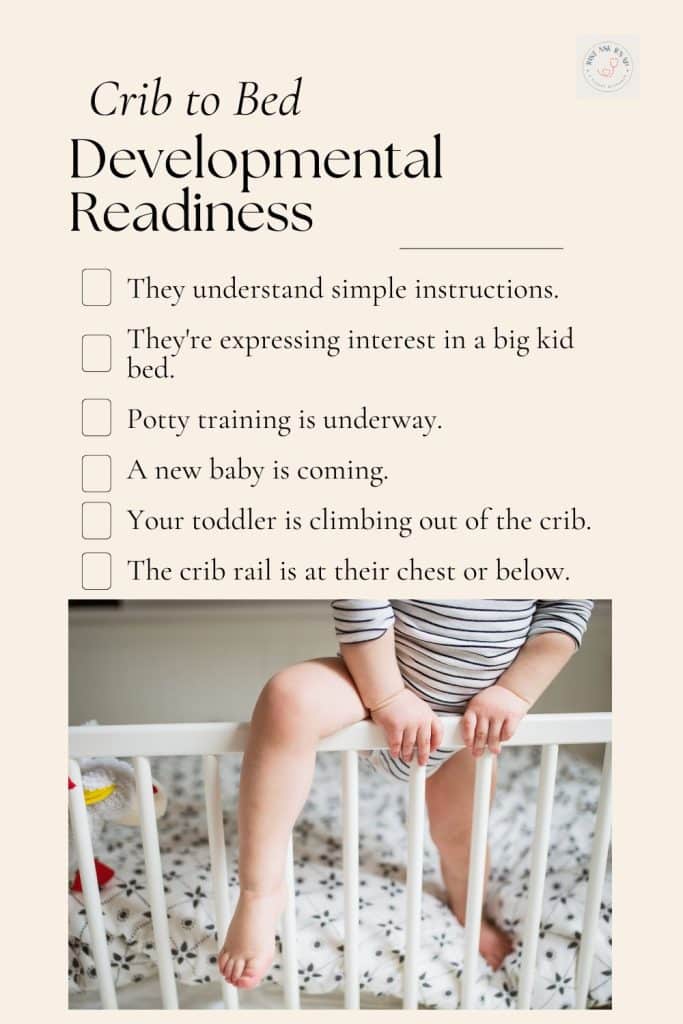
Your toddler is climbing out of the crib. This is the number one safety concern. Once your child can climb out, the crib is no longer a safe sleep space. According to research from the Consumer Product Safety Commission, crib-related injuries often occur when children attempt to climb out, making this a non-negotiable sign that it’s time for a change.
The crib rail is at their chest or below. When standing, if your toddler’s chest reaches the top of the crib rail, they have enough leverage to potentially tumble over. This typically happens around 35 inches tall.
Developmental Green Lights
They understand simple instructions. Can your child follow basic directions like “stay in bed” or “lie down”? This cognitive readiness makes the transition smoother and safer.
They’re expressing interest in a big kid bed. Many toddlers start talking about wanting to sleep in a bed “like mommy and daddy” or point out beds in books and shows. This natural curiosity can be a wonderful motivator.
Potty training is underway. If your child needs to use the bathroom during the night, being able to get out of bed independently becomes important. Many families find that coordinating these transitions makes practical sense.
A new baby is coming. While this isn’t a developmental sign, it’s a common practical consideration. If you need the crib for a sibling, plan to move your older child at least 6-8 weeks before the baby arrives, giving them time to adjust without associating the change with the new baby “taking” their crib.
When It’s Okay to Wait
Here’s your permission slip: you don’t have to rush this transition. If your 2.5-year-old is sleeping beautifully in their crib, isn’t climbing out, and everyone is happy with the arrangement, there’s no urgent need to change what’s working. Some children stay in cribs happily until age 3 or even beyond, and that’s perfectly fine.
Research suggests that children who transition later often have fewer sleep disruptions during the change. If you’re not seeing safety concerns, trust your instincts about your child’s readiness.
Making the Transition Safely from Crib to Bed
Choosing the Right Bed
Floor beds have gained popularity for good reason. Inspired by Montessori principles, these beds sit directly on the floor or very low to the ground, virtually eliminating fall risks. A study in the Journal of Pediatric Health Care noted that floor beds can promote independence while maintaining safety—your toddler can get in and out freely without the danger of a significant fall.
Standard toddler beds are also excellent options, sitting lower than twin beds and often using the same crib mattress you already own, which can ease the transition with familiar smells and comfort.

Raised slightly off the ground for better airflow and support. Two entrances for easy entry.
Toddler-Proofing the Sleep Space
Once your child has bedroom freedom, safety becomes paramount:
- Anchor all furniture to walls. Dressers, bookshelves, and changing tables must be secured with anti-tip straps or furniture anchors. The Consumer Product Safety Commission reports that tip-over accidents peak in children ages 1-3.
- Cover outlets and secure cords. Use outlet covers on all electrical outlets and ensure window blind cords are out of reach or use cordless options.
- Install a baby gate at the door. This gives your child the freedom to move around their room while keeping them contained in a safe space. Some parents prefer this to door locks, as it allows visibility and air flow.
- Remove climbing hazards. Move furniture away from windows and remove anything your child could use to climb to unsafe heights.
- Check for small objects. Get down at your child’s level and scan for choking hazards, especially small toys or decorative items.





Creating a Sleep-Friendly Environment
- Keep the room dark. Blackout curtains help maintain healthy sleep patterns and reduce early morning wake-ups.
- Minimize stimulation. Remove or cover toys that might be too exciting at bedtime. A bookshelf with a few bedtime stories is fine; a bin of action figures may prove too tempting.
- Use a nightlight if needed. Some children feel more secure with a soft, warm-toned nightlight.
Strategies for a Smooth Transition from Crib to Bed
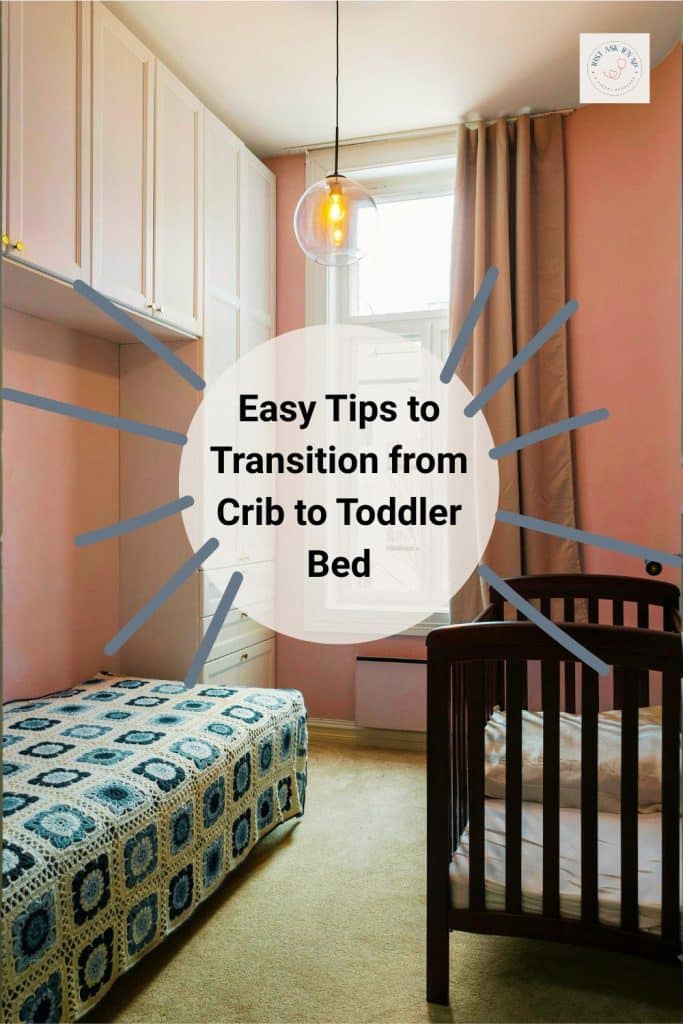
The Gradual Approach
Week 1-2: Introduction phase. Let your child explore the new bed during the day. Read books there, play quiet games, build positive associations.
Week 3: Naptime trial. Start having your toddler take naps in the new bed while still using the crib at night. This allows them to get comfortable without the pressure of nighttime sleep.
Week 4: Full transition. Move to nighttime sleep in the new bed.
The Cold Turkey Method from Crib to Bed
Some families prefer a clean break, especially when safety concerns require immediate action. Make the transition exciting with:
- A “big kid bed ceremony” celebrating this milestone
- Special new bedding featuring their favorite characters
- A bedtime book about moving to a big bed
- Lots of positive reinforcement and celebration
For more information on basic Sleep Training, check out this blog post
Maintaining Boundaries with Love
This is where many parents struggle, and that’s completely normal. Your newly mobile toddler will test boundaries—it’s developmentally appropriate, not defiance.
Stay consistent with bedtime routines. The routine itself becomes the cue for sleep. Keep it predictable: bath, books, songs, cuddles, lights out.
Use the silent return method. If your child gets out of bed, calmly and quietly return them without much interaction. No scolding, but no extended conversations either. Consistency is key—you may need to do this many times the first few nights.
Consider a toddler clock. These clocks use colors to show children when it’s time to sleep and when it’s okay to get up. Many parents find these helpful for early risers.
Expect regression. Sleep may get worse before it gets better. This is normal and temporary. A 2020 study in Pediatrics found that most sleep disruptions following bed transitions resolve within 2-3 weeks with consistent responses.
When to Seek Support
If sleep problems persist beyond a month, or if you notice signs of anxiety, fear, or significant distress, don’t hesitate to reach out to your pediatrician. Sleep consultants who specialize in toddler transitions can also provide personalized strategies for your family’s unique situation.
A Final Word of Encouragement
This transition marks a beautiful moment in your child’s development—their growing independence, their ability to navigate their world with increasing confidence. Yes, it might mean a few challenging nights. Yes, you might find yourself doing the silent walk of shame back to their room multiple times at 2 AM. But you’re not alone in this, and you’re doing a great job by researching and preparing.
Trust yourself. You know your child better than any expert ever could. Whether you transition at 18 months or 3 years, with a floor bed or a toddler bed, what matters most is that you’re making a thoughtful choice based on your child’s needs and your family’s circumstances.
The crib days are fleeting—and so are these early big-kid bed adventures. Before you know it, you’ll be tucking in a kindergartener who can barely remember their crib at all. You’ve got this, mama. One night at a time.
