
Baby Solid Foods Stages by Age: A Complete Feeding Guide for Parents (2026)


Did you know that 54% of parents report feeling anxious about starting their baby on solid foods? I get it – I’ve been there too! Whether you’re a first-time parent or looking to refresh your knowledge, knowing when and how to introduce baby food is crucial for your little one’s development.
For a downloadable option, check out my new ebook https://justaskjennp.com/feeding-solids-landing/
According to the American Academy of Pediatrics (AAP), most babies are ready to start baby solid food around 6 months of age, but every child’s journey is unique. Let’s explore exactly when and how to begin this exciting new chapter in your baby’s life!
Signs Your Baby is Ready for Solid Foods
Some time between the ages of 4 to 6 months you may notice that your baby starts watching intently as you feed yourself. They may even try to grab at your food. That’s a great sign of their readiness to begin experimenting with solid foods. Prior to offering that first food, make sure your baby has good head control.
Before 4 months, your baby has a very strong tongue thrust and does not have the ability to safely manipulate food in his or her mouth. Their primary source of nutrition will still be formula or breastmilk throughout the first year, but as they add more foods to their menu, the shift gradually occurs.
The Complete Baby Food Timeline (4-12 Months)
First Foods to Try (4-6 Months)
4-6 Months
- Primary Nutrition: Breast milk or formula
- Feeding Frequency: 4-6 times per day
- Volume per Feeding: 6-8 ounces (180-240 ml)
- Daily Total: 24-32 ounces (720-960 ml)
- Key Transitions:
- Watch for signs of readiness for solids (sitting with support, good head control)
- May begin introducing single-grain iron-fortified cereals around 6 months
Between 4 and 6 months your baby is still getting all of his or her nutrition from milk/formula. Food introduction is your time to play with your baby. Not all babies are ready to start solids, and not all parents are ready to enter into that new phase, and that’s okay!
There is no nutritional need for solids until 6 months. This is a time to enjoy new tastes and have fun with it. No pressure! If your little one is not ready, put it away and try again in a week or so.
I usually encourage my parents to begin with the “yellow vegetables” – squash, sweet potatoes and carrots. These veggies are easy to thin out, they are mild in taste- not bitter, but not overly sweet, and they are easy to make at home if you choose to go that route. (Instant pots help a ton- overcook those veggies nice and soft!)
Thin out the vegetables even more with a little formula or expressed breast milk to offer extra nutrition and provide more familiarity with the taste of the new foods.
After the first introductions to solids have begun and you’re ready to move on to new foods, I like to offer different options to grow the palate- alternate fruits and other vegetables, mix some new combinations.
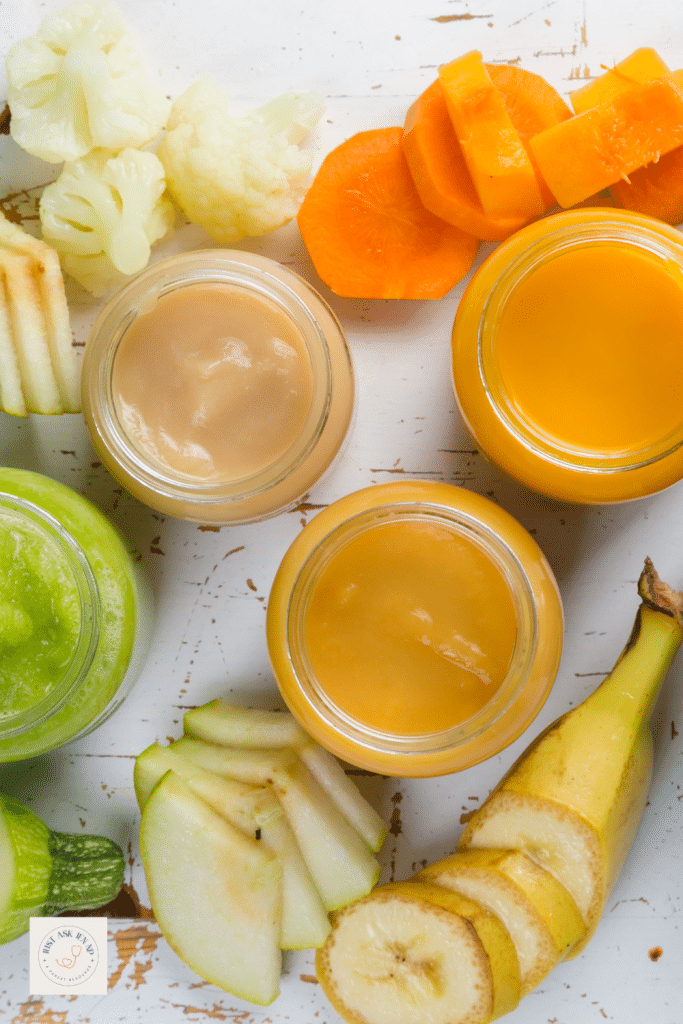
Remember that new foods will lead to new bowel habits! You might see some new colors and textures in the diaper, and that’s expected. Sometimes it takes a while to get the gut to get used to more fiber. Read more in the next section.
Advancing to Stage 2 Solid Foods (6-8 Months)
Primary Nutrition: Breast milk or formula + first foods
Milk Feeding Frequency: 4-5 times per day
Milk Volume: 24-32 ounces (720-960 ml) total daily
Solids Schedule:
- 2-3 meals per day, starting with 2-3 tablespoons per meal
- Foods to introduce:
- Iron-fortified cereals
- Pureed vegetables (sweet potatoes, carrots, peas)
- Pureed fruits (bananas, apples, pears)
- Baby-led weaning options listed here
After 6 months the iron stores from mom are used up, and we want to ensure there is adequate iron in a baby’s new diet. Formula is fortified with iron, but breastmilk does not have iron in it. Therefore, this is the stage to think about the nutritional needs of your baby. If you haven’t introduced solids yet, now is the time!

Infant cereals are an easy option for iron. They are fortified with lots of nutrients that can be beneficial. Keep in mind that iron can cause constipation. Usually I recommend the “P fruits” – prunes, peaches, and pears. Think “P” for “poop” to help these little ones combat the constipation that happens with new foods. Other iron sources include: eggs, beans, lentils, peas, nut butter, pureed meats, green veggies (broccoli, spinach), fish.
Early introduction to allergens has been shown to reduce the incidence of food allergies in children. These foods include eggs, nut butters, and fish. To prevent choking, you can mix the thick nut butters into thinner food options such as applesauce, oatmeal and banana, or other purees. There are also peanut melt snacks available.
Once you introduce an allergen, try to be consistent with that food at least a couple times per week to prevent developing an allergy over a lengthy hiatus.

Keep in mind that your baby’s nutritional needs are still being met with breastmilk or formula, so even though they are eating solids, we don’t want to substitute a bottle or nursing session with solid foods. Keep up with at least 24 ounces of milk and add 2-3 meals of solids per day.
If you want more information on introducing baby-led weaning, use this link
Moving to Stage 3 and Finger Foods (8-12 Months)
8-10 months
Primary Nutrition: Breast milk or formula + increasing solids
Milk Feeding Frequency: 3-4 times per day
Milk Volume: 20-28 ounces (600-840 ml) total daily
Solids Schedule:
- 2-3 meals per day, 4-6 tablespoons per meal
- New textures and foods:
- Soft mashed foods
- Soft finger foods
- Protein sources (pureed meats, well-cooked legumes)
- Small pieces of soft fruits and cooked vegetables
- Introduction to yogurt and cheese
10-12 Months
- Primary Nutrition: Moving toward more table foods
- Milk Feeding Frequency: 3-4 times per day
- Milk Volume: 16-24 ounces (480-720 ml) total daily
- Solids Schedule:
- 3 meals + 1-2 snacks per day
- 6-8 tablespoons per meal
- Foods to include:
- Chopped soft table foods
- Variety of fruits and vegetables
- Protein sources
- Grains and cereals
- Dairy products
At this age hopefully your baby has developed an excitement around meal times. This is a great time to use the “baby-led weaning” method. Weaning does not mean decreasing milk intake, it is a gradual transition to feeding themselves.
This is a great way to introduce new textures and provide your baby with the independence he or she may want at this age. Generally, the idea is that whatever the family is eating for that meal, the baby gets the toned down version- smaller pieces, unseasoned.
Remember that there is a difference between gagging and choking. Gagging is a normal protective reaction that we all have- it will help protect and teach your baby what they can handle. Choking is a life-threatening episode that will need immediate intervention (back blows for babies). Always supervise your child at meal times.
- Good options for self feeding:
- Fruits- banana, mango, pear, strawberries, avocado, cut round fruits into small bites like grapes, tomatoes and berries
- Vegetables- most peeled and cooked vegetables, sweet potato, carrot, squash
- Proteins- ground, soft and shredded meats and fish, tofu, yogurt, scrambled eggs, shredded cheese
Essential Safety Guidelines and Best Practices
Most foods are okay to introduce before the 1st birthday, however, avoid honey as it can carry the risk of infant botulism. Cow’s milk should be avoided until 1 as well- the proteins are difficult for an infant to break down, but cheese and yogurt are okay.
Remember to use safe preparation methods, wash hands and cook food properly.
Keep mealtimes fun and relaxed. Enjoy the process.
Reach out to your health care provider if you notice any new symptoms of a food allergy- facial rash, drooling, vomiting, wheezing, eczema flares, diarrhea. Also, if your little one doesn’t seem to be following the typical developmental trend for solids- gagging, food refusal, etc, it may be time to seek out a speech therapist to help with oral skills.
Check this option for more information and guidance click here
For another great resource, see this link
Starting your baby on solid foods is an exciting milestone that deserves celebration! Remember, every baby develops at their own pace, so trust your instincts and work closely with your pediatrician.
Ready to begin? Start with a single ingredient puree when your little one shows signs of readiness, and slowly work your way through the stages. The journey of introducing solid foods is just as much about learning and bonding as it is about nutrition. Here’s to many happy, messy mealtimes ahead!
