
Your Complete Guide to Stress-Free Holiday Travel with Baby in 2025

Written by Jen, Pediatric Nurse Practitioner
If you’re reading this with a knot in your stomach about traveling with your baby this holiday season, take a deep breath. I’ve been there—both as a pediatric nurse practitioner who’s counseled hundreds of families through travel anxieties, and as a mom who’s survived more than a few chaotic holiday trips myself.
Here’s what I want you to know right from the start: Your baby is more adaptable than you think, and you’re more capable than you give yourself credit for.
Yes, travel with a baby takes extra planning. Yes, sleep might be a bit wonky for a few days. But with the right preparation and realistic expectations, you can absolutely maintain healthy sleep habits while creating beautiful holiday memories with your family.
Let me walk you through exactly what I recommend to my patients—the evidence-based strategies that actually work in real life, not just in theory.
If you need more information on sleep training tips prior to your holiday travel, check out this link.
Understanding Your Baby’s Sleep Needs While Traveling
Before we dive into the practical tips, let’s talk about why baby sleep can be so challenging when we’re away from home.




The Science Behind Sleep Disruption
Your baby’s circadian rhythm—their internal biological clock—relies heavily on environmental cues. In sleep medicine, we call these “zeitgebers,” which is a fancy German word meaning “time givers.” The three most powerful zeitgebers for babies are:
- Light and darkness
- Consistent sleep environment
- Predictable routines and sounds
When we travel, we often inadvertently disrupt all three of these cues. The good news? We can recreate them almost anywhere with just a little preparation.
Research published in the Journal of Sleep Research shows that maintaining these environmental cues during travel can reduce sleep disruption by up to 60%. That’s huge!
See this article from the Australian Parenting Website on sleep during holidays and travel
What’s Normal (and What’s Not) for Travel with Baby
Let me set some realistic expectations. Here’s what’s completely normal during travel:
✓ Taking longer to fall asleep the first 1-2 nights ✓ One or two extra night wakings ✓ Earlier wake-ups due to light or noise ✓ Shorter naps in unfamiliar environments ✓ Some extra clinginess or need for reassurance
What should prompt you to adjust your approach:
⚠ Multiple wakings every hour throughout the night ⚠ Complete refusal to sleep in the designated sleep space ⚠ Extreme distress that doesn’t improve after 20-30 minutes ⚠ Signs of illness (fever, unusual fussiness, pulling at ears)
The difference between “normal travel adjustment” and “this isn’t working” is important. Most babies need 2-3 nights to adjust. If you’re on night four and things are getting worse instead of better, it’s time to reassess.
The Three Non-Negotiable Sleep Essentials for Travel with Baby
In my clinical practice, I’ve identified three must-haves for successful baby sleep while traveling. Get these right, and you’re setting yourself up for success.
Essential #1: Create Darkness (Yes, Real Darkness)
I cannot overstate how important this is. Light exposure—especially blue wavelength light from screens, lamps, and early morning sun—suppresses melatonin production. Melatonin is your baby’s natural sleep hormone, and even small amounts of light can reduce it by 50% or more.
Think about where you’re staying. Guest rooms at grandma’s house often have thin curtains. Hotels have notorious light leaks around blackout curtains. Airbnbs can be wildly variable.
My professional recommendation: Invest in quality portable blackout covers. Look for:
- Adjustable systems that work on any window size
- Suction cups or tension rods (no damage to walls)
- Truly opaque material—hold it up to bright light before purchasing
- Quick setup (you don’t want to be wrestling with these at bedtime)
Clinical pearl: I tell parents to aim for “can’t see your hand in front of your face” darkness. If you can see shapes or shadows after your eyes adjust, it’s not dark enough.
For families using pack-and-plays, consider a SlumberPod or similar tent-style cover. These create a dark, cozy microenvironment and are particularly helpful if you’re room-sharing.
Pro tip from the pediatric sleep world: Set these up during daylight hours on day one. Your baby will be less suspicious of their sleep space if they’ve seen it during awake time first.
Uses sticky tape that easily comes off when needed. Cut to size.
Essential #2: A Safe, Familiar Sleep Space
As a nurse practitioner, I have to start with safety. The ABCs of safe sleep apply everywhere:
- Alone (no bed-sharing unless you already safely co-sleep at home)
- Back (always on their back to sleep)
- Crib (or other approved sleep surface—firm, flat, fitted sheet only)
These rules don’t change when you travel, even if well-meaning relatives tell you “we all survived” different practices. Current evidence on SIDS prevention is clear and non-negotiable.
Choosing crib to travel with baby: I recommend these features to my families:
- Easy setup (ideally under 2 minutes)
- Meets current CPSC safety standards
- Firm, flat mattress (not the thin pad some come with)
- Breathable mesh sides
- Lightweight enough to actually bring with you
The familiarity factor: Here’s something many parents miss—bring your baby’s regular sleep sack and any age-appropriate comfort items. That familiar scent and texture provide powerful sensory continuity.
Position the sleep space strategically:
- Away from high-traffic areas
- In the quietest corner of the room
- As far from your bed as possible if room-sharing (babies sense your presence and sleep lighter)
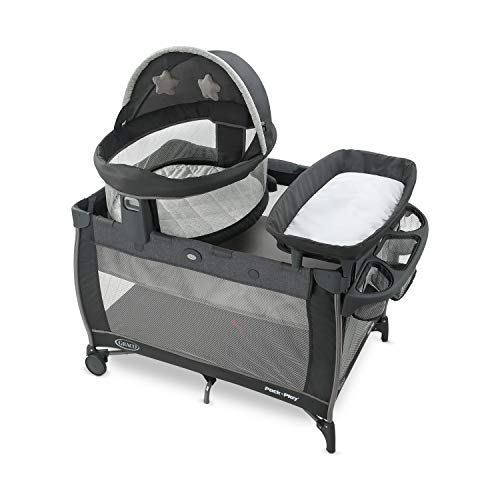
All in one portable crib option with changing table, bassinet and crib all in one set.
When flying to your destination, a flat surface will help your little one obtain the nest sleep for nap time. I like this option:
Quick to set up and helps with sleep on long flights. No overtired babies upon arrival!
Essential #3: White Noise—Your Secret Weapon
White noise serves two crucial functions during travel:
- Auditory masking: It blocks unpredictable sounds (conversations, TV, cousins running around) that would otherwise startle your baby awake or prevent deep sleep
- Continuity cue: It’s one thing that sounds exactly the same at home and away, which is incredibly calming to babies
The research on white noise is compelling. Studies show it can help babies fall asleep three times faster and reduce night wakings by helping them transition between sleep cycles more smoothly.
My recommendations for travel sound machines:
- Battery-powered or long-lasting rechargeable (don’t rely on outlets)
- True white, pink, or brown noise (not ocean waves or lullabies—those have varying patterns that can wake babies)
- Portable with a clip attachment
- Volume control
Aim for about 50 decibels—roughly the volume of a running shower. Keep the machine at least 7 feet from your baby’s head, never in the crib itself.
Important note: Don’t rely on phone apps. You need your phone available, apps drain batteries, and you risk notifications waking your baby. A dedicated device is worth the investment.
Low tech option to get the work done. Travels well with no need for WiFi or and App to use. Simply twist and go. Has a timer and simple "shush".
Maintaining Your Bedtime Routine on the Road
Here’s a truth from developmental psychology: Routines matter more than locations.
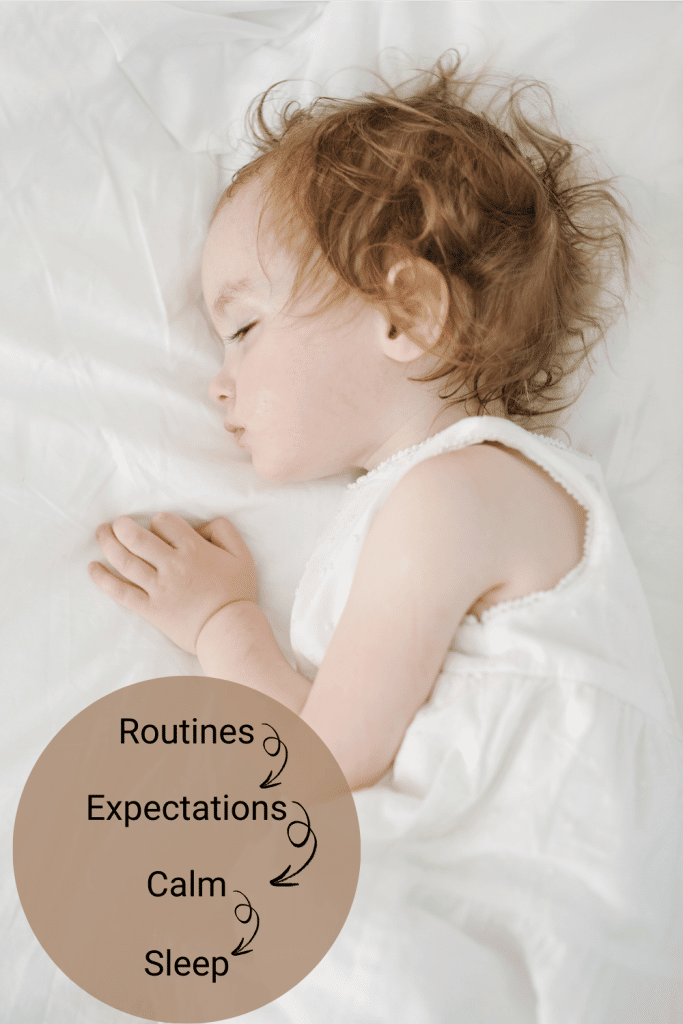
Your bedtime routine is the most powerful signal to your baby’s brain that sleep is coming. The sequence of events triggers a cascade of neurological and hormonal changes that prepare the body for rest.
The Gold-Standard Bedtime Routine
Keep it consistent, even while traveling:
Step 1: Bath or diaper change (5-10 minutes)
- Warm water is naturally calming
- If no bath is available, a warm washcloth works too
Step 2: Pajamas and sleep sack (2-3 minutes)
- The physical sensation of putting on sleep clothes is a powerful cue
Step 3: Feeding (15-20 minutes)
- Breast, bottle, or sippy cup depending on age
- Try to finish feeding before the bedroom to prevent sleep associations
Step 4: Book or song (5 minutes)
- Keep it brief and calm
- Same book/song every night if possible
Step 5: Lights off, white noise on, into crib (immediate)
- No lingering—confidence is key
- “Night night, I love you” and then leave
Total time: 30-40 minutes
The key is consistency in sequence and tone, not perfection in execution. If you need to shorten steps or adapt slightly, that’s fine—just keep the order the same.
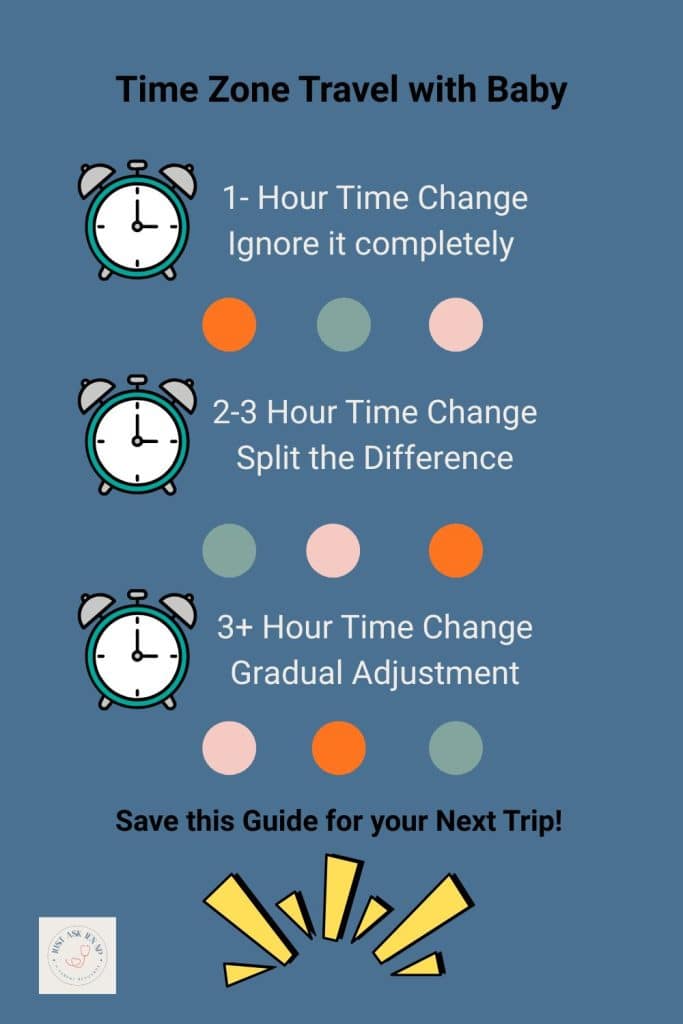
Navigating Time Zone Changes: A Clinical Approach to Travel with Baby
As a healthcare provider, I often see parents stress unnecessarily about time zones. Here’s my practical, evidence-based advice:
1-Hour Time Difference
Strategy: Ignore it completely. Keep your home schedule.
Why: A one-hour shift is well within normal day-to-day variation. Forcing an adjustment will likely create more disruption than just maintaining your routine.
2-3 Hour Time Difference
Strategy: Split the difference.
Example: If your baby’s bedtime is 7:00 PM at home and you’re traveling 3 hours ahead (so it’s 10:00 PM body time), put them down around 8:00-8:30 PM local time.
Why: This minimizes disruption while allowing for some adjustment. You’ll shift fully to local time over 2-3 days naturally.
More Than 3 Hours
Strategy: Gradual adjustment, 30 minutes per day.
How it works:
- Day 1: 30 minutes closer to new time zone
- Day 2: 1 hour closer
- Day 3: 1.5 hours closer
- Continue until adjusted
Critical component: Get outside during the day! Natural light exposure is the most powerful circadian rhythm regulator. Even 15-20 minutes of outdoor time in the morning and afternoon will help tremendously.
My Clinical Pearl for Jet Lag
The biggest mistake parents make is keeping babies up late hoping they’ll sleep in. This always backfires. Overtired babies wake earlier, not later. Stick to age-appropriate wake times and trust the process.
Day-of-Travel Strategies
Travel days are inherently disruptive, but we can minimize the impact.
Morning Departures
- Wake at your normal time (don’t start the day sleep-deprived)
- Offer first nap at home or in the car if driving
- Pack car/plane essentials in easily accessible bag
Afternoon Departures
- Protect the morning nap at all costs
- Accept that afternoon nap might happen in transit
- Pack sleep sack and white noise in diaper bag
Evening Departures
- One solid nap during the day minimum
- Bring pajamas and do routine in airport/rest stop if needed
- Aim for normal bedtime, even if arrival is late
Red-Eye Flights
- Full bedtime routine before leaving home
- Pajamas and sleep sack for the plane
- Window seat for privacy
- White noise headphones or portable machine
- Don’t worry about “perfect” sleep—any rest counts
Nurse practitioner tip: Always pack sleep essentials in carry-on. Lost luggage without your blackout covers and sound machine can derail your entire trip.
Age-Specific Travel Considerations
Different ages, different challenges. Here’s what I tell families based on developmental stage:
Newborns (0-3 Months)
The good news: Most flexible age for travel. Newborns can sleep almost anywhere with white noise.
Focus on:
- Safe sleep surface (never adult beds or couches)
- Feeding on demand
- Don’t stress about routine yet—it’s too early
Unique consideration: Newborns need to eat frequently. Plan for feeding stops every 2-3 hours on long drives.
4-8 Months
The challenge: Routine becomes more important. Sleep patterns are consolidating.
Focus on:
- All three environmental essentials (darkness, familiar space, white noise)
- Maintaining wake windows (overtiredness is your enemy)
- Watch for separation anxiety starting around 6-7 months
Unique consideration: This age often experiences the “4-month sleep regression” or teething. If your baby is already struggling at home, consider postponing travel if possible.
9-18 Months
The challenge: Very routine-dependent. May protest new environments.
Focus on:
- Consistent bedtime routine is crucial
- All three environmental essentials
- Extra reassurance without creating new habits
Unique consideration: This age is mobile. Baby-proof the sleep space and consider a baby gate if staying somewhere with stairs.
Toddlers (18+ Months)
The challenge: Big feelings, big opinions. Can get overstimulated by travel excitement.
Focus on:
- Clear boundaries and expectations
- Maintain routine religiously
- Consider a toddler clock for wake-up time
Unique consideration: Can understand simple explanations. Talk about the trip beforehand and what to expect.
Setting Boundaries with Extended Family (The Conversation No One Wants to Have)
This is where I see the most stress in my practice. Parents feel guilty enforcing sleep boundaries during precious family time. Let me reframe this for you:
Prioritizing your baby’s sleep isn’t selfish—it’s ensuring everyone enjoys the visit.
An overtired baby is a miserable baby. A miserable baby means stressed parents and disappointed grandparents who can’t enjoy their grandchild. Protecting sleep is a gift to everyone.
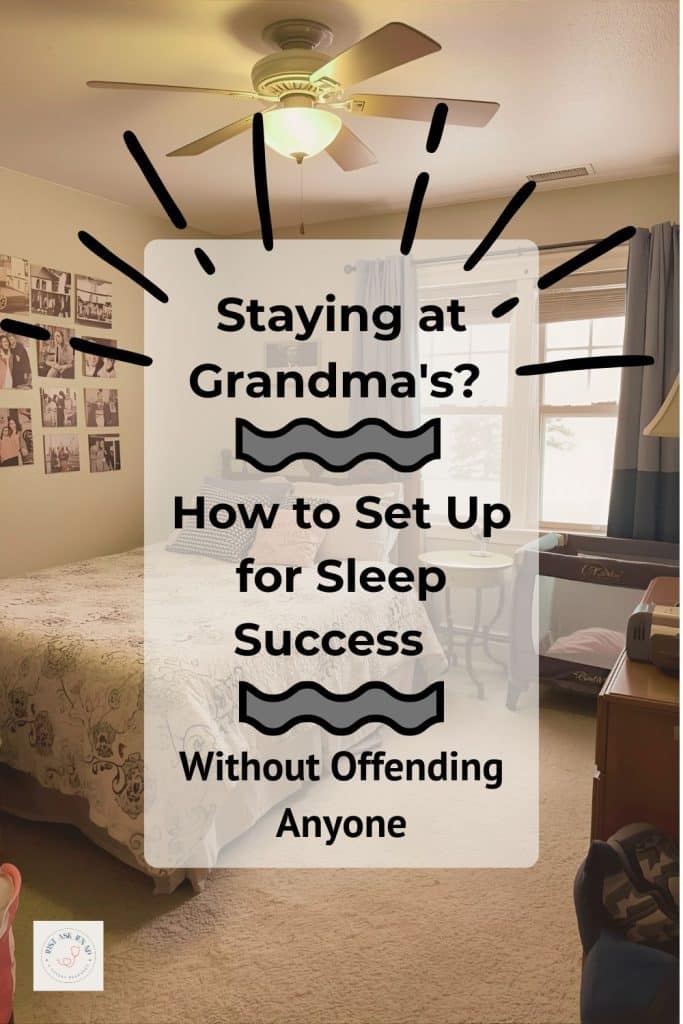
The Pre-Arrival Conversation prior to travel with baby
Don’t wait until you arrive. Text, call, or email before you leave:
Script option 1 (direct): “Hi Mom! We’re so excited to see you next week. I wanted to give you a heads up that [Baby’s name] is on a pretty consistent sleep schedule now. Bedtime is 7:00 PM, so we’ll need to excuse ourselves around 6:30 to start the routine. Thanks for understanding!”
Script option 2 (educational): “Quick question about the guest room—does it have curtains or blinds? We’ve found that [Baby] sleeps so much better in a dark room, so we’re bringing some blackout covers. Also, we’ll need the space to be quiet during naps at 9 AM and 1 PM. I know it seems rigid, but it makes such a difference in everyone’s mood!”
Handling Pushback
“Just this once won’t hurt.” Response: “You’re right that once won’t ruin everything! But we’ve worked really hard to establish healthy sleep habits, and keeping them consistent means [Baby] will be happy and fun to be around. That’s what we all want, right?”
“We never did all that with our kids.” Response: “I appreciate how you raised your kids! Sleep science has evolved a lot, and our pediatrician has been really helpful in guiding us. This is what works for our family.”
“Can’t you just bring the baby out for dinner?” Response: “We’d love to, but past experience has shown us that skipping bedtime leads to a really rough next day. How about we do lunch instead, or we celebrate with you right after the baby goes down?”
Clinical Advice on Boundaries
You don’t need to justify your parenting choices. A simple, warm “This is what works for us” is complete. You’re the expert on your child.
When Things Don’t Go as Planned (Because They Probably Won’t)

Let’s get real. Even with perfect preparation, travel sleep rarely goes perfectly. Here’s how to handle common challenges:
Night 1 Meltdown
What’s happening: Your baby is confused and possibly overtired from travel.
What to do:
- Extra physical reassurance (you can stay in the room)
- Maintain boundaries (don’t bring them into your bed if you don’t at home)
- Be patient—it may take 45-60 minutes instead of usual 15
When to adjust: If distress is escalating after 30 minutes, take a break. Go to a different room, offer comfort, try again in 20 minutes.
Multiple Night Wakings
What’s happening: Light sleep environment, anxiety about new space, or genuine disruption.
What to do:
- Check environmental factors first (is it truly dark? white noise working?)
- Respond calmly but briefly
- Don’t introduce new habits (no rocking to sleep if you weren’t before)
When to worry: If wakings are accompanied by fever, unusual crying, or signs of illness, trust your instincts and seek medical care if needed.
Early Wake-Ups
What’s happening: Almost always a light issue, sometimes noise.
What to do:
- Double-check blackout situation
- White noise volume sufficient?
- Maintain normal schedule despite early wake
Don’t: Keep baby up late hoping they’ll sleep in (this always backfires!)
Complete Nap Refusal
What’s happening: Overstimulation, overtiredness, or unfamiliar environment.
What to do:
- Offer a car or stroller nap instead
- Even 20-30 minutes of sleep is better than none
- Compensate with earlier bedtime
Clinical consideration: One missed nap won’t derail everything. Two or more days of no naps requires adjustment (earlier bedtimes, quieter activities).
The Packing List: A Nurse Practitioner’s Checklist

I created this list based on what my most successful traveling families always bring:
Critical Sleep Items (Pack in Carry-On!)
□ Portable blackout covers □ Travel crib or bassinet □ Portable sound machine □ Sleep sack (bring 2 for backup) □ Lovey or comfort item (if age-appropriate) □ Extra batteries for sound machine □ Charging cables
Backup Support Items
□ Painter’s tape (for sealing light gaps) □ Baby monitor (if separate rooms) □ Nightlight for hallway □ Extra pacifiers
Routine Items
□ Favorite bedtime books □ Pajamas (multiple sets) □ Regular diaper supplies □ Bottles/sippy cups □ Formula or breast milk storage
Medical Essentials
□ Infant pain reliever/fever reducer □ Thermometer □ First aid basics □ Any prescription medications □ Teething remedies if relevant
Optional but Helpful
□ Stroller for on-the-go naps □ Car seat sunshades □ Portable changing pad □ Baby gate (if staying somewhere with stairs)
Coming Home: The Reset Protocol
This is the part parents often overlook. After several days of travel, you need a solid plan to get back on track.
What to Expect
Night 1 back home: Some confusion or protest. Your baby got used to different surroundings and possibly different responses from you or other caregivers.
Days 2-4: Gradual return to baseline. Some extra night wakings or early wake-ups are normal.
By day 7: Most babies are back to their pre-travel pattern, assuming the trip was less than 2 weeks.
The Reset Strategy
- Return to your exact home routine immediately. Don’t ease back in—just restart.
- Resist continuing any travel habits. If you rocked more, responded faster, or had looser boundaries, tighten back up on day one.
- Prioritize the first few nights. Clear your schedule, decline invitations, and focus on sleep.
- Be consistent but compassionate. Your baby might genuinely be confused. Extra reassurance during awake times is great; changing sleep rules isn’t.
- Give it time. If things aren’t perfect by night three, that’s normal. By night seven, you should see major improvement.
When to Seek Professional Help
Contact your pediatrician or a pediatric sleep consultant if:
- Sleep hasn’t improved after 10-14 days home
- New sleep problems emerged that weren’t present before
- You’re feeling overwhelmed or burnt out
- Your baby seems unwell
Special Travel Scenarios: Clinical Guidance
Hotel Stays
Advantages: Usually quiet, blackout curtains, climate controlled
Challenges: Light gaps, hallway noise, unfamiliar smells
Pro tips:
- Request a room away from elevators and ice machines
- Roll towels to block light under the door
- Set up white noise to mask hallway sounds
- Don’t feel bad about room service if it preserves bedtime
Staying with Family
Advantages: More space, familiar people, washing machine access
Challenges: Boundary setting, noise control, too much “help”
Pro tips:
- Have the conversation about expectations before arrival
- Don’t be apologetic about sleep needs
- Offer to help with meals or chores to show appreciation
- Consider staying in a nearby hotel if space is too tight
Vacation Rentals (Airbnb/VRBO)
Advantages: Full kitchen, separate bedrooms, more homelike
Challenges: Variable conditions, limited control, setup requirements
Pro tips:
- Read reviews carefully—look for families mentioning baby sleep
- Message host about window coverings before booking
- Confirm there’s a suitable space for a pack-and-play
- Bring extra supplies (you won’t have a store nearby necessarily)
Camping or Outdoor Travel
Advantages: Natural darkness, exhausting activities lead to tired babies
Challenges: Temperature control, noise, safety concerns
Pro tips:
- Only attempt this with babies 6+ months who are already great sleepers
- Bring multiple layers for temperature regulation
- White noise is even more critical (nature is loud!)
- Have a backup plan (nearby hotel) if it’s not working
Building Confidence: You’re Ready for This
I’ve worked with thousands of families over the years, and here’s what I’ve learned: The parents who struggle most with travel aren’t less prepared—they’re just less confident.
You know your baby better than anyone. You’ve been reading their cues, meeting their needs, and adapting to challenges since day one. Travel is just another adaptation.
Trust These Truths:
1. Your baby is resilient. A few imperfect nights won’t undo months of healthy sleep habits.
2. Flexibility and consistency can coexist. You can maintain boundaries while being responsive to genuine needs.
3. Everyone’s “perfect” looks different. Don’t compare your baby’s travel sleep to Instagram posts or stories from friends.
4. You’re doing a great job. The fact that you’re reading this, planning ahead, and trying to optimize your baby’s sleep shows tremendous dedication.
A Final Word from Your NP
Every holiday season, I see exhausted parents in my office after disastrous trips, and excited parents who successfully navigated travel. The difference is rarely luck—it’s preparation and mindset.
You don’t need perfection. You need:
- Darkness
- A safe sleep space
- White noise
- Consistent routine
- Realistic expectations
- Self-compassion
That’s it. You’ve got this.
Now go pack those blackout covers, practice your boundary-setting scripts, and make some beautiful holiday memories. Your baby might surprise you—and even if there are rough moments, you’ll get through them together.
Safe travels, and happy holidays from my family to yours.
Frequently Asked Questions
Q: What if my baby refuses to sleep in the pack-and-play?
A: This is really common! Try these strategies: (1) Let them play in it during the day first, (2) Put your worn t-shirt in there for your scent, (3) Start naps in it before attempting nighttime, (4) Consider if they’re overtired and need an earlier bedtime. If they’re genuinely distressed after 30 minutes, take a break and try again later. Sometimes it takes 2-3 attempts.
Q: Should I wake my baby at their normal time even if they had a rough night?
A: Yes, as much as it pains me to say it. Maintaining consistent wake times helps regulate circadian rhythm. You can allow 30-60 minutes of flexibility, but sleeping way past normal wake time will shift the entire schedule and make the next night harder.
Q: Can I skip naps if we have special activities planned?
A: I strongly advise protecting at least one nap. If you must skip, compensate with a much earlier bedtime (like 5:30-6:00 PM). Remember: overtired babies are cranky babies. That special activity won’t be fun if your baby is melting down.
Q: What if my family thinks I’m being too rigid?
A: Explain it this way: “A well-rested baby is a happy baby. I want everyone to enjoy this time together, and the best way to ensure that is to keep [baby] on their schedule. I promise it’s worth it!” Then hold your boundary with confidence.
Q: How long does it take babies to adjust to a new environment?
A: Most babies need 2-3 nights to fully adjust. The first night is usually the roughest. By night three, you should see significant improvement if your setup is good.
Q: Is it okay to bed-share while traveling if my baby won’t sleep alone?
A: If you safely co-sleep at home following the Safe Sleep Seven guidelines, you can continue while traveling. If you don’t bed-share at home, I don’t recommend starting while traveling—it’s often harder to stop than you expect, and unfamiliar beds/rooms may not be safe for co-sleeping.
Q: What if we’re traveling somewhere with very different climate (much hotter or colder)?
A: Temperature regulation is crucial for sleep. Aim for 68-72°F in the sleep space. Dress baby in appropriate layers—if it’s cold, add a wearable blanket over pajamas. If it’s hot, lightweight cotton pajamas and a breathable sleep sack. Check baby’s neck or back (not hands/feet) to assess temperature—should feel neutral, not hot or cold.
